At a glance
- 01
Sealed for contaminated refuse
Containers built to keep contaminated loads inside the box.
- 02
Lids for everything else
Roll-offs with lids keep out rain, wind, wildlife and unwanted dumping.
- 03
Talk before you book
Every contaminated load is different, so we discuss the material first.
- 04
Honest about fit
We’ll tell you straight whether we’re the right fit for the material.
Some loads can’t ride in an open box. Big Dog Disposal & Recycling offers two kinds of contained roll-off: sealed containers for contaminated refuse, and roll-off containers with lids. Both are for commercial, industrial and residential customers in Prince Rupert and the surrounding communities, and both start with a conversation about what is going in them.
Sealed versus lidded
The two can look alike from the street, but they do different jobs.
- A roll-off with a lid keeps things out: rain, wind, animals and other people’s garbage. The load inside is ordinary debris that simply benefits from cover.
- A sealed container is about keeping things in. It is meant for contaminated refuse, where the concern is the material escaping from the box rather than weather getting into it.
If you’re not sure which one your job needs, that is exactly the question to call us about. Choosing the container is part of the job, not something you’re expected to have worked out before you phone, and a few minutes on the call usually settles it.
What “contaminated” can mean
The word covers a wide range. In general waste-industry use, it can describe soil or gravel that has been soaked with fuel or oil, debris from a spill clean-up, building material coated with something that shouldn’t be released, or industrial refuse that is wet, dusty or strongly odorous. Some of that material is non-hazardous but messy. Some of it is regulated.
In BC, wastes classed as hazardous fall under provincial environmental rules that set out how they’re stored, transported, documented and disposed of, often by specialized, licensed handlers. Other materials may need testing before anyone can say how they should be handled. We won’t guess about your load, and you shouldn’t either: describe it to us and we’ll tell you honestly whether a sealed container is the right fit, or whether the material needs to go another way.
What to tell us when you call
- What the material is, and how it became contaminated.
- Roughly how much there is, and whether it is solid, wet or loose.
- Any test results, safety data sheets or paperwork you already have.
- Where the material is now and where the container could sit.
- Who else is involved, such as a consultant or the property owner.
That information lets us give you a straight answer and an accurate quote, rather than a surprise once the truck is on site.
Why lidded roll-offs make sense here
Prince Rupert gets more rain than almost anywhere else in the country, and an open container collects it. Water adds weight to every load and turns some debris into sludge. A lid keeps the load dry between work days. It also keeps wind from lifting light material such as insulation and packaging out of the box, stops gulls, ravens and bears from picking through anything that smells, and discourages passers-by from adding their own garbage to a bin you’re paying for.
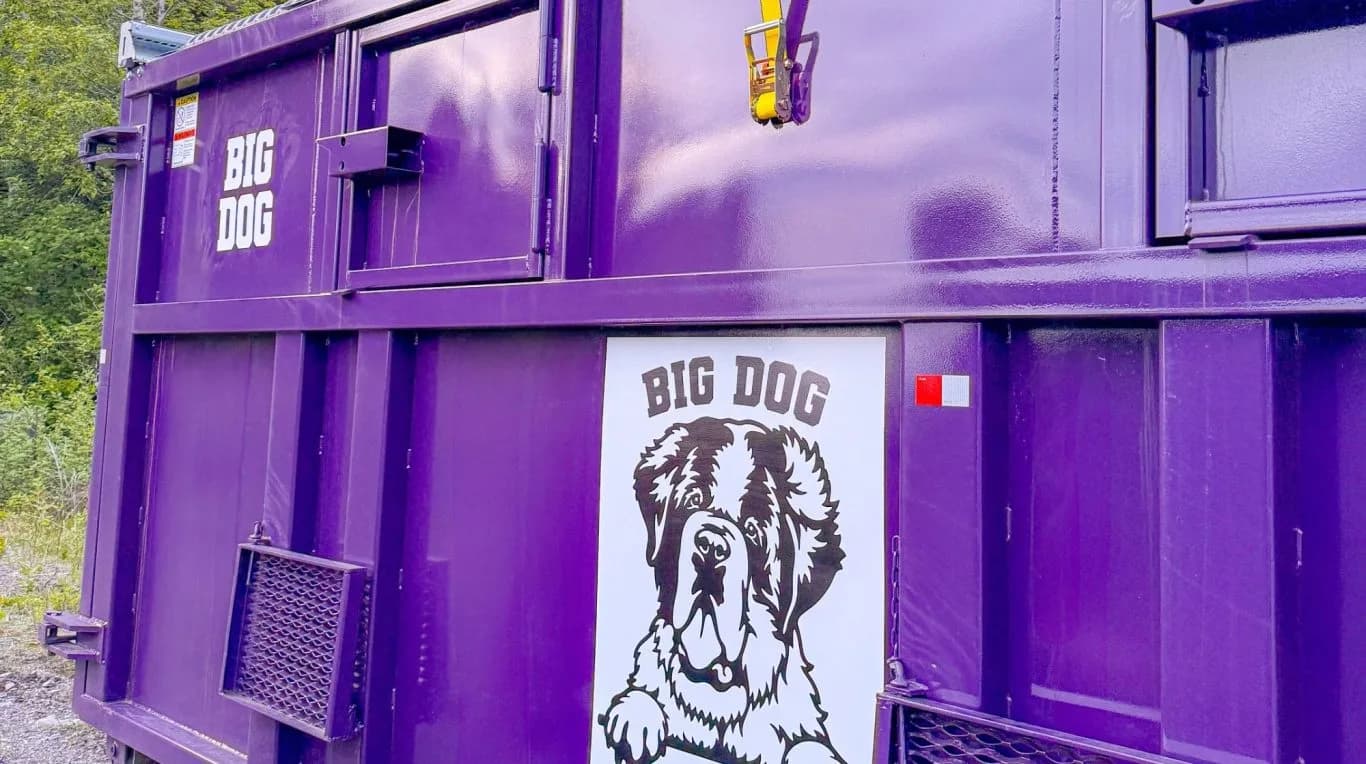
Lidded roll-offs suit job sites that are left unattended, loads that shouldn’t blow around, and any project where you’d rather the contents stay out of sight. They work the same way as our standard roll-off containers: rolled off the truck onto your site, loaded, and hauled away when full.
Industrial and commercial sites
Industrial yards, marine operations, shops and contractors are the most common users of contained bins. A spill clean-up, a tank or equipment removal, or a renovation in a building with a past use that raises questions can all produce material that should travel covered. On construction and demolition jobs, a contained bin can sit beside the main roll-off for anything that shouldn’t be mixed in with ordinary debris.
Get in touch first
For contained loads, a phone call is the best first step. Call 778-884-8484, Monday to Friday from 7 am to 6 pm, or email bigdogdisposal@outlook.com with a description and any photos or paperwork. You can also reach us through our contact page. We’re fully licensed and insured, and we would rather take a few minutes to understand your material than send the wrong container.
Questions people ask
What counts as contaminated waste?
It can mean many things, from fuel-soaked soil to spill clean-up debris or odorous industrial refuse. Call us and describe your material, and we’ll talk through whether a sealed container fits.
Can you take hazardous waste?
Wastes classed as hazardous in BC have their own rules for handling and transport, often by specialized carriers. Describe the material to us and we’ll tell you honestly whether it is something we can help with.
What is the difference between a sealed container and a roll-off with a lid?
A lid keeps rain, wind, animals and other people’s garbage out of an ordinary load. A sealed container is for contaminated refuse, where the concern is keeping the material inside.
Why would I want a lid on a regular roll-off?
In a rainy place like Prince Rupert, a lid keeps water from adding weight to the load. It also keeps light debris from blowing out, deters wildlife and stops others from dumping in your bin.
What information do you need for a quote?
What the material is, how much there is, any test results or paperwork, and where the container would sit. Photos help.