Bears have an extraordinary sense of smell and a strong memory for food. A bear that finds a meal in a garbage can or a dumpster will come back, and it will start checking the next bin down the street. WildSafeBC says garbage is the most reported attractant leading to conflict with black bears across British Columbia.
Those conflicts rarely end well for the bear. In its 2019 announcement of provincewide attractant audits, the BC government said that too many bears and other wildlife are destroyed every year because their natural behaviour has been altered, and that putting an animal down is always a last resort for public safety. Securing garbage is the simplest way to stop that cycle before it starts.
What the law says in BC
Feeding dangerous wildlife is against the law in BC, and leaving attractants where bears can reach them can bring a visit from the Conservation Officer Service. During the 2019 audits, officers carried out 704 inspections, which led to 732 enforcement actions: 76 charges, 301 warnings and 355 Dangerous Wildlife Protection Orders. A protection order directs a property owner to remove an attractant or face a $575 fine, and the Province said fines under its attractant legislation range from $230 to $575. Those figures are from 2019, so check current amounts with the Province.
The audits looked at more than garbage. The Province lists pet food, birdseed and compost as attractants of concern too, along with fruit left on trees.
When bears are most likely to find your bin
Bears can turn up at a bin any time they're out of the den, but some seasons are worse than others. The Province stepped up its 2019 audits in September and October, when bears forage hard to put on weight before winter. That's when a bin full of food scraps is most tempting, and when a bear that has found one is most determined to get back in.
On the North Coast the forest runs right up to town, and both black bears and grizzlies live in the region; the Khutzeymateen grizzly bear sanctuary is not far from Prince Rupert. A garbage problem here isn't hypothetical, and a bin that sits in a quiet lane or behind a building at night is exactly where a bear will look first.
Storing garbage at home
The Province's bear safety page and WildSafeBC give consistent advice:
- Keep garbage indoors until collection morning, in a garage, basement or shed that a bear can't get into.
- Freeze the smelliest waste. Double-bag meat and fish scraps and keep them in the freezer until garbage day.
- Don't put containers out the night before. WildSafeBC's bin tagging program puts stickers on carts set out at the curb the day before collection, because overnight garbage is an easy target.
- Use airtight containers, and keep them as clean as you can between pickups. Even an empty can holds enough smell to make a bear investigate.
- Tie it down if it has to be outside. If you can't store it indoors or build an enclosure, WildSafeBC suggests securing the container to a structure so it can't be dragged away.
- Don't leave garbage in a vehicle. The Province warns against garbage in the back of trucks or under canopies.
Are bear-proof bins really bear-proof?
"Bear-proof" is the everyday name, but the more accurate term is bear-resistant. WildSafeBC recommends a certified bear-resistant container and is clear that it is not 100% bear-proof: it adds a layer of protection and deters most wildlife. Even where a community has bear-resistant carts, WildSafeBC says indoor storage is still better.
For any bin, the same rules decide whether it works:
- A lid only works when it's closed. A heavy lid propped open, or a locking bar left undone, is no defence.
- Don't overfill. If bags stop the lid closing, the bin is open to wildlife.
- Lock it every time. Padlocks and lock bars matter most overnight and on weekends, when nobody is around.
- Keep the area clean. Spilled waste and leaking bags around a bin are an invitation of their own.
- Report damage. A bent lid or broken latch should be fixed before a bear finds it.
What businesses can do
Restaurants, grocery stores, fish processors, hotels, work camps and apartment buildings concentrate food waste in one place, which makes their bins the most attractive in town. The Province says businesses and property owners can install bear-proof bins, or build a bear-proof fence or storage area to hold garbage until it's collected.
A commercial bin with a proper lid also helps with the other scavengers of the coast: ravens, crows, gulls and raccoons. Choose a bin size that holds everything between pickups, so staff never have to leave bags beside it, and make closing and locking the lid part of the closing routine. If you produce a lot of cardboard, a separate cardboard recycling bin keeps boxes from jamming the garbage bin's lid open.
Big Dog's bear-proof options
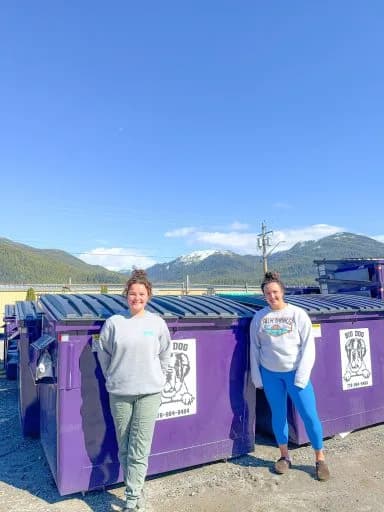
Big Dog's front-load bins come in 3, 4 and 6 cubic yard sizes and can be fitted with **bear-proof lids**, metal or plastic lids, padlocks and lock bars. For projects, we also have roll-off containers with lids. Tell us what you'll be putting in the bin and when your site is unattended, and we'll suggest the setup that fits. Call 778-884-8484, email bigdogdisposal@outlook.com or ask for a quote.
If a bear gets into your garbage
Stay back and don't approach the bear. Report aggressive or threatening bears, or a bear that poses an immediate threat, to the Conservation Officer Service's Report All Poachers and Polluters (RAPP) line at 1-877-952-7277. Then fix whatever let it in: the bear will be back to check.
Questions people ask
Are bear-proof garbage bins really bear-proof?
Not completely. WildSafeBC recommends certified bear-resistant containers but says they are not 100% bear-proof; they add a layer of protection and deter most wildlife. Indoor storage is still best, and any lid only works when it's closed and locked.
Can I put my garbage out the night before collection?
WildSafeBC and the Province both advise against it. Keep garbage indoors or in a bear-proof enclosure until the morning of collection; WildSafeBC tags carts set out the day before to remind owners.
Can I be fined for attracting bears in BC?
Yes. In 2019 the Province said attractant fines range from $230 to $575, and a Dangerous Wildlife Protection Order directs an owner to remove an attractant or face a $575 fine. Check current amounts with the Province.
What should a business do with garbage in bear country?
The Province says businesses can install bear-proof bins or build a bear-proof fence or storage area. Size the bin so nothing is left beside it, keep the area clean, and lock the lid every time.
Does Big Dog offer bear-proof bins?
Yes. Our front-load bins can be fitted with bear-proof lids, along with metal or plastic lids, padlocks and lock bars. Ask by phone at 778-884-8484 or by email at bigdogdisposal@outlook.com.