At a glance
- 01
3, 4 and 6 yards
Cardboard bins in the same sizes and footprint as our waste bins.
- 02
Optional cardboard slot
Staff feed flattened boxes in while the lid stays closed and locked.
- 03
Room in your garbage bin
Boxes out of the waste bin means less volume going to landfill.
- 04
Wood and steel too
Recycling cardboard, wood and steel is part of what we do.
Walk behind almost any store in town on delivery day and you’ll see the problem: a garbage bin full of air because it is packed with empty boxes. Cardboard recycling in Prince Rupert fixes that. Big Dog Disposal & Recycling supplies front-load cardboard recycling bins for businesses, so boxes go out as recyclable fibre instead of taking up space in your waste bin and in the landfill.
Cardboard bins, sized like our waste bins
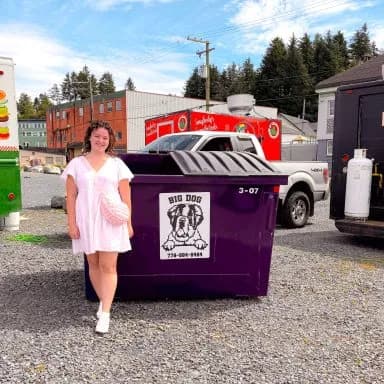
Our cardboard bins come in 3, 4 and 6 cubic yards, the same as our front-load general waste bins. All three are 5′9″ wide. The 3-yard bin stands 4′3″ high and 3′5″ deep, the 4-yard is 4′6″ high and 4′3″ deep, and the 6-yard is 5′5″ high and 5′7″ deep. Because the width never changes, a cardboard bin can sit beside your garbage bin in the same enclosure.
Why a slot helps
A cardboard slot is an opening in the front or lid of the bin, wide enough for a flattened box and too narrow for a bag of garbage. It does two jobs. It lets staff recycle without lifting a lid, which means the lid can stay shut and locked against rain and passers-by. It also nudges people toward breaking boxes down, since a whole box won’t fit through. If you want the lid secured as well, ask about padlocks or lock bars.
Keeping the load clean
Cardboard is only worth recycling if it arrives at the mill as cardboard. Across the recycling industry, the usual troublemakers are the same:
- Food and grease. Greasy pizza boxes, produce cartons with rotting leaves, and anything soaked with oil spoil the fibre around them.
- Plastic film and foam. Shrink wrap, bubble wrap, packing peanuts and foam blocks often ride along inside boxes and need to come out first.
- Waxed boxes. Waxed produce and seafood cartons look like cardboard but generally aren’t recyclable with it.
- Bagged garbage. A single bag of trash tossed in by mistake can turn a clean load into a dirty one.
Each recycler sets its own standards, so if you have something you aren’t sure about, ask us before it goes in the bin. A load that is badly contaminated may have to be handled as garbage rather than recycled, which defeats the purpose of having the bin.
Keeping it dry
Prince Rupert is one of the rainiest cities in Canada, and wet cardboard is a real issue here. Soaked boxes weigh far more, stick together, and lose the fibre strength that makes them valuable to recycle. Keep the lid closed, use the slot rather than propping the lid open, and don’t stack boxes beside the bin to wait for space. If a bin overflows regularly, it is a sign you need a larger size, not a sign to start a pile.
Making it a habit for staff
Cardboard programs fail on habits, not equipment. A few things make a difference. Keep a box cutter by the back door so breaking down boxes takes seconds. Pick one person on each shift to check the bin. Put the cardboard bin closer to the door than the garbage bin, so the right choice is the easy one. A short sign on each bin listing what goes where saves a lot of guesswork. Our guide to cardboard recycling for businesses goes further into setting up a program.
Who it suits
Grocery and retail stores, restaurants, hardware and building supply, warehouses, and any business that receives freight on pallets generates steady cardboard. Even a small shop that takes a few deliveries a week often finds a 3-yard cardboard bin pays for itself in garbage space freed up.
Wood and steel
Cardboard isn’t the only material we recycle. Recycling cardboard, wood and steel is part of our work. If your business produces pallets, crates or scrap metal along with boxes, mention it when you call.
Getting a cardboard bin
Call 778-884-8484 or email bigdogdisposal@outlook.com from Monday to Friday, 7 am to 6 pm, or ask for a quote online. Tell us roughly how much cardboard you go through and whether you want a slot, and we’ll put a quote together for your business in Prince Rupert or the surrounding area.
Questions people ask
What can go in a cardboard recycling bin?
Clean, dry, flattened corrugated cardboard is what these bins are for. If you have other paper or packaging you’d like to recycle, ask us before mixing it in, since recyclers set their own standards.
Can pizza boxes be recycled?
Generally, cardboard with grease or food on it is not wanted by recyclers, because it contaminates the fibre around it. Clean parts can sometimes be torn off and recycled; the greasy part belongs in the garbage.
Do I need a cardboard slot?
It is optional. A slot lets staff feed in flattened boxes while the lid stays closed, which keeps rain and garbage out. It is a good fit for bins in shared or public-facing areas.
What size cardboard bin do I need?
Cardboard bins come in 3, 4 and 6 cubic yards. A business with a few deliveries a week often starts at 3 yards; a grocery store or warehouse usually needs more. Tell us your volume and we’ll suggest a size.
Does flattening boxes really matter?
Yes. An unflattened box is mostly air, so a bin of whole boxes fills up several times faster than a bin of flattened ones.